Babylog
When our baby was born, the hospital gave us paper forms to fill in to keep track of feeds and nappy changes. This is Germany afterall. Doing this manually was a chore, and it felt like having all this data on paper is useless, it would be much better to have it digitally, and privately.
That's where Babylog started. Code is so cheap now, that it made sense to build a small app for two people. We started with the basic columns. Now we also log sleep and baths, and we can start a feed or nap on one phone and end it on the other.
I integrated a pi-based AI agent (optional) that's running on openrouter, using this assistant I can just dictate multiple entries to log, which i then just need to approve. No more manual entry.
A quick look at the day
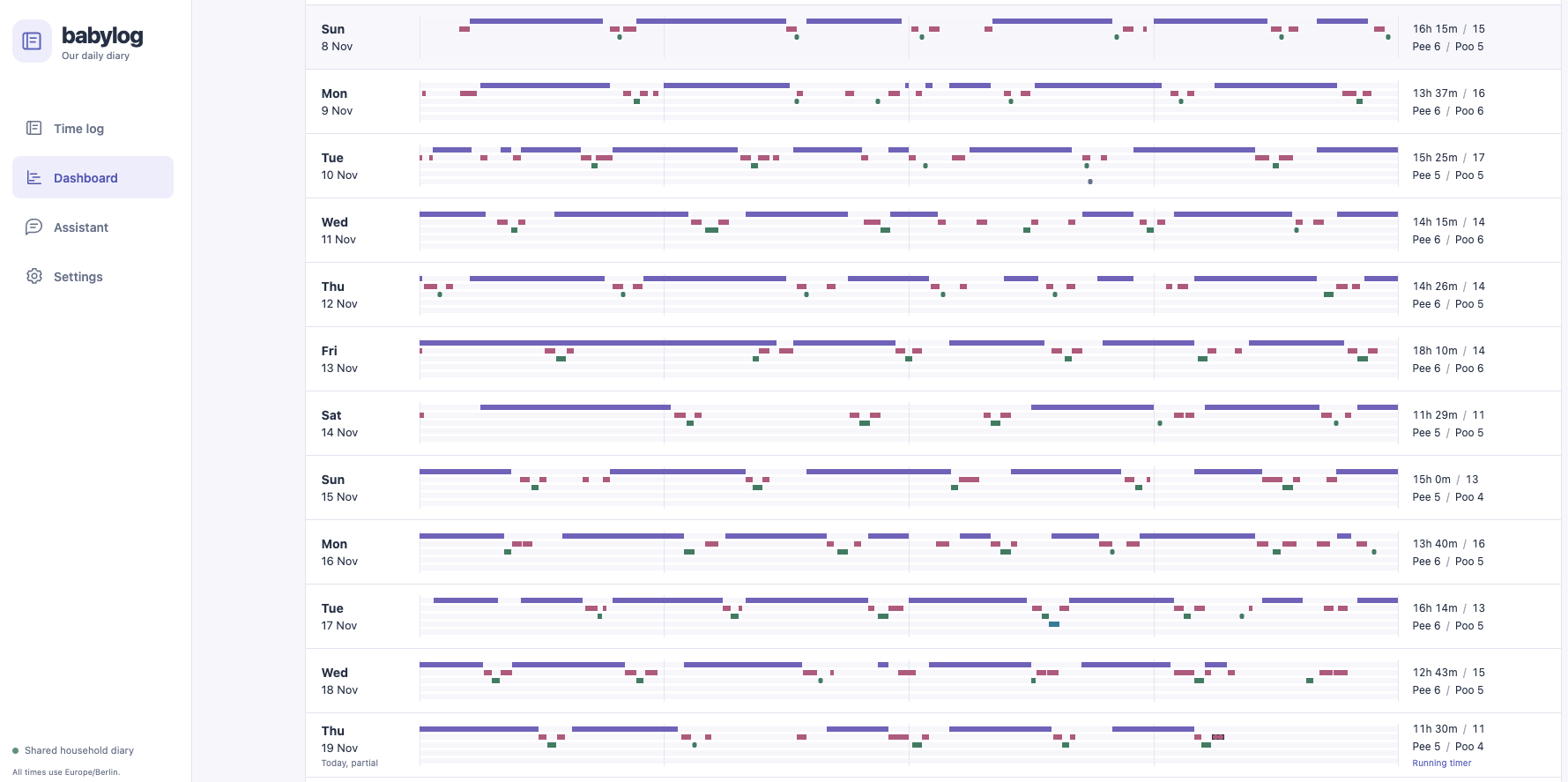
When I open the diary, I can see how long it's been since the last feed or nappy change. On the dashboard, I can look across several days and see when naps usually start or how feeding times vary.
Changing what we track
Because this is open-source and custom, we can customize activities or edit the daily checklists on-demand. If we need a new field or want to see something different on the diary screen or dashboard. It's quick to add a new feature.
From local hosting to Prisma Compute
The app uses React. The server runs on Prisma Compute with Bun and Postgres.
I had push reminders set up when I hosted Babylog locally. Keeping the reminder scheduler on Prisma Compute would have required me to upgrade to a paid plan.
I originally ran both the language model and speech transcription locally (along with the pi-agent). But this isnt really open-source friendly, so I took a more generic "deploy friendly" approach. OpenRouter now handles both. Babylog calls it from the server and keeps the API key there. We can still use the manual entry if the Assistant is down, or not configured.
If you're a new parent, fork Babylog and customize it to your needs. The GitHub README shows how to run your own copy.